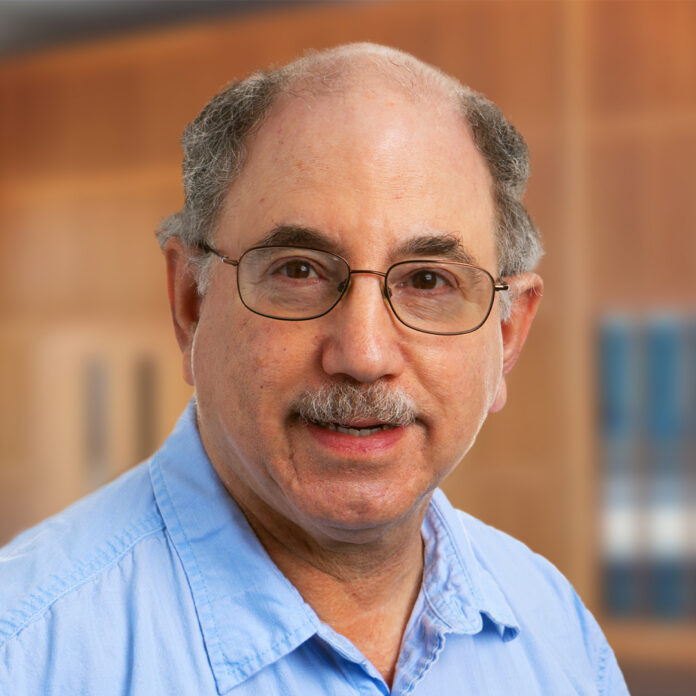
Louis Noodleman, PhD
Professor Emeritus
Department of Integrative Structural and Computational Biology
Research Focus
Electronic Structure and Reactions of Iron-Sulfur Electron Transfer Proteins and Redox Enzymes, and for Iron-Oxo Enzymes. We use modern methods of quantum chemistry (density functional methods) and protein electrostatics to investigate electronic structures, spectroscopy and the reaction pathways for the active sites of redox metalloproteins. (1) Iron-sulfur proteins are electron transfer agents in the electron transport chains of respiration, photosynthesis, and for metabolic conversions. (2) The enzyme nitrogenase is a complicated multielectron redox catalyst for the conversion of molecular nitrogen to ammonia, forming a primary building block for making amino and nucleic acids. (3) The iron-oxo dimer enzymes methane monooxygenase (MMO) and ribonucleotide reductase (RNR) use two electron redox and oxygen activation chemistry. MMO hydroxylates hydrocarbons while RNR produces a tyrosine radical which by a long range hole propagation and H abstraction generates deoxyribonucleotides from ribonucleotides, the first step in DNA synthesis. (4) Cytochrome c oxidases (CcOs) are redox driven proton pumps in the membranes of mitochondria and many aerobic bacteria. CcOs are the terminal oxidases (Complex IV) of the electron transport chain in mitochondria and aerobic bacteria, and drive ATP synthesis by producing the required electrochemical potential gradient (proton motive force) across the membrane, in conjunction with membrane Complexes I and III. These are chemically difficult and biologically important reactions. Common themes include the coupling between electron and proton transfer, the modulation of redox potentials by the active site cluster and the protein and solvent environment, and the activation of small molecule substrates, including molecular nitrogen or oxygen.
News, Events & Media