Scripps Research spin-off BlackThorn Therapeutics advances lead clinical program for major depressive disorder
January 23, 2020

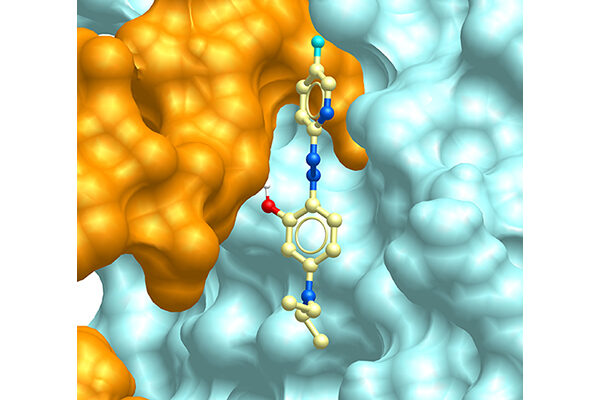
PET (Positron-emission tomography) imaging of the brain has demonstrated that the lead compound BTRX-335140 successfully occupies kappa opioid receptors. Image credit: BlackThorn Therapeutics Inc.
LA JOLLA, CA — The clinical-stage biopharmaceutical company BlackThorn Therapeutics Inc., a spin-off from Scripps Research, has begun patient enrollment for a phase 2 clinical trial to evaluate the impact of its lead drug candidate in individuals with major depressive disorder. This follows last year’s successful phase 1 trial, which demonstrated favorable safety and tolerability in human subjects.
The compound, BTRX-335140, which was discovered in collaboration with Scripps Research faculty members Hugh Rosen, MD, PhD, and Edward Roberts, PhD, selectively blocks kappa opioid receptors. The brain’s kappa opioid system mediates many of the negative emotions that occur under conditions of stress. BTRX-335140 is intended to reduce these stress responses, thereby easing symptoms of depressed mood, anxiety and cognitive impairment.
“People are suffering from mental health disorders more than ever before, but the available therapies to combat them are still limited,” says Rosen, professor in the Department of Molecular Medicine at Scripps Research and co-founder of BlackThorn Therapeutics. “Intelligent interventions that are based on a better understanding of our behavioral circuits could really help restore the lives of patients and their loved ones.” The current proof-of-concept trial is expected to be completed by December 2020.
More than 16 million Americans are affected by major depressive disorder, according to the National Institute of Mental Health, with a greater prevalence in women. Furthermore, depression often co-occurs with other serious conditions, including cardiovascular disease, cancer and substance use disorder.
Hugh Rosen: A physician-scientist’s guide to developing medicines
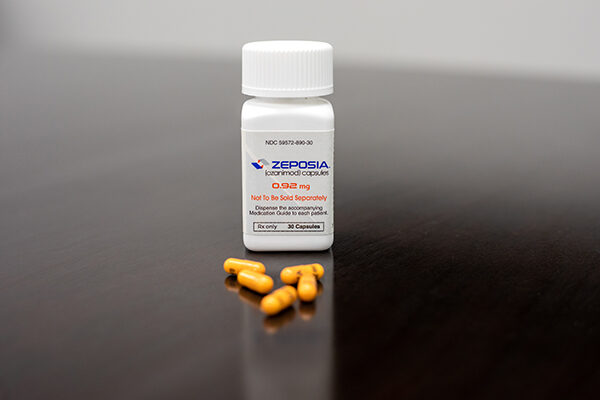
More than 90% of drugs fail to make it from the lab bench to approval. How, then, has a physician-scientist like Hugh Rosen found so much success in developing medicines? Rosen, who’s the chair of the Molecular and Cellular Biology Department and the Pearson Family Chair at Scripps Research, co-invented the drugs ozanimod (approved for multiple sclerosis and ulcerative colitis) and navacaprant (in Phase 3 trials for major depressive disorder). In this episode of Science Changing Life, listen in as Rosen unveils the success stories behind these groundbreaking treatments—shedding light on the challenges and triumphs shaping modern medicine.
Bringing precision therapy to mental disorders
Mental disorders like depression and schizophrenia affect the lives of millions of people around the world, and yet, available treatment options have remained the same for decades. In this Front Row lecture, Scripps Research professor Hugh Rosen shared how his pioneering research has led to the development of the drug navacaprant, which precisely targets one of the brain’s behavioral circuits and is currently in clinical testing for major depressive disorder. Harnessing his expertise as a physician-scientist, Rosen has discovered and developed multiple other medicines, including ozanimod—a breakthrough treatment approved for multiple sclerosis and ulcerative colitis.
An engine for new medicines: A century of science changing life
Calibr, a nonprofit research institute founded by Scripps Research President and CEO Pete Schultz, joined Scripps Research in 2018 as its drug discovery division. As a world-class nonprofit “bench to bedside” drug discovery engine, Calibr delivers groundbreaking solutions to unmet medical needs by uniting the creativity of fundamental discovery with highly focused R&D capabilities and expertise.