Lisa Racki, PhD
Associate Professor
Department of Integrative Structural and Computational Biology

Research Focus
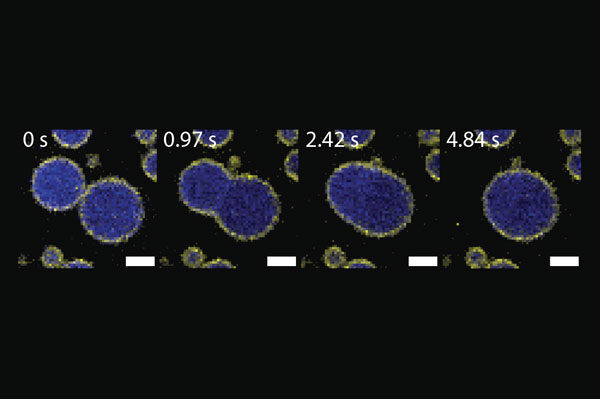
In most environments, including the human body in the context of chronic infections, bacteria spend much of their time in a starved state, limited for one or more nutrients. Bacterial starvation is important for human health because most conventional antibiotics target activities that are important for bacteria during growth such as DNA synthesis and cell wall biosynthesis, but less important to non-proliferating cells. The Racki Lab aims to understand how bacteria organize and remodel their subcellular architecture to survive during starvation. Ultimately a mechanistic understanding may point the way to targeting slow-growing pathogens.
We are particularly interested in two processes critical to fitness during starvation:
(1) Changes in chromatin structure
(2) Synthesis of polyphosphate granules
We use the opportunistic human pathogen Pseudomonas aeruginosa as a model system to study these interlinked processes.
Select Publications
-
Racki, Lisa R.; Tocheva, E. I.; Dieterle, M. G.; Sullivan, M. C.; Jensen, G. J.; Newman, D. K. Polyphosphate granule biogenesis is temporally and functionally tied to cell cycle exit during starvation in Pseudomonas aeruginosa. Proceedings of the National Academy of Sciences of the United States of America 2017, 114, E2440-E2449.
View -
Racki, Lisa R.; Naber, N.; Pate, E.; Leonard, J. D.; Cooke, R.; Narlikar, G. J. The histone H4 tail regulates the conformation of the ATP-binding pocket in the SNF2h chromatin remodeling enzyme. Journal of Molecular Biology 2014, 426, 2034-2044.
View -
Racki, Lisa R.; Yang, J. G.; Naber, N.; Partensky, P. D.; Acevedo, A.; Purcell, T. J.; Cooke, R.; Cheng, Y.; Narlikar, G. J. The chromatin remodeller ACF acts as a dimeric motor to space nucleosomes. Nature 2009, 462, 1016-1021.
View